Hybridization, Local Adaptation, and Conservation of Arctic Grayling

Arctic grayling are a native fish species in North America. Despite being classified as a single species (Thymalus arcticus), two genetic lineages have been described, called the Beringia and Nahanni lineages. After experiencing a 70% decline in population since the 1960’s, Arctic grayling is designated as “may be at risk” in Alberta and a high-priority candidate for assessment federally by the Committee on the Status of Endangered Wildlife in Canada. However, no formal conservation status or management plans are in place. My research program aims to help inform plan development by examining morphological differentiation between the genetic lineages and expanding the genomic resources for Arctic grayling to see how distinct the lineages are. If the lineages are sufficiently differentiated, provincial and federal governments may confer individual conservation plans to each subspecies/species of grayling that are more reflective of local conditions rather than a blanket policy across the species range.
Evolutionary and Conservation Genomics of Galapagos Tortoises
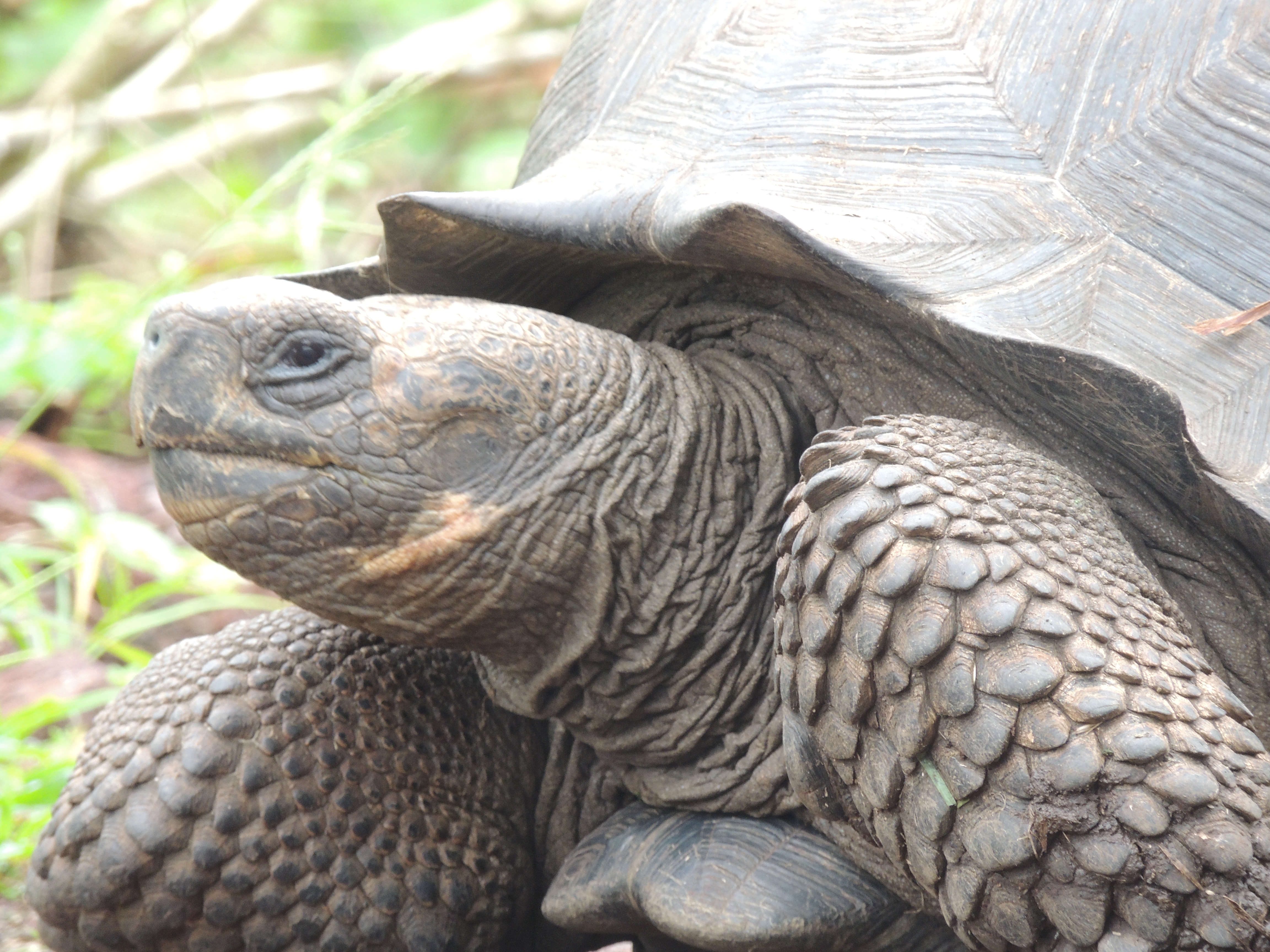
Galapagos tortoises (Chelonoides spp.) are an iconic group of species, with 15 named species, and additional unnamed genetic lineages. Human induced environmental changes have led to a ~90% decline in the numbers of Galapagos giant tortoises, resulting in all the species being listed as Endangered or Critically Endangered by the International Union for Conservation of Nature (IUCN). My research program examines two aspects of Galapagos tortoises: investigating how the genomic differences among these species arose, and applying genetics to inform conservation actions. I do this research in collaboration with Dr. Evelyn Jensen (University of Newcastle) and Dr. Gisella Caccone (Yale University).
Genetic Diversity of Franklin’s Ground Squirrels in Alberta

Franklin’s ground squirrels (Spermophilus franklinii) are one of eight ground squirrel species found in Alberta. Once common in central Alberta, it is likely that this species is in decline as naturalists are reporting fewer sightings. However, its status with the province is currently listed as “undetermined” as there is not enough information about the species to decide what protections, if any, are needed. I am working to use genetic methods to help fill the knowledge gap, as part of a large collaborative effort with the non-profit organization Nature Alberta, Dr. Jessica Haines (MacEwan University), and Dr. David McFadyen (MacEwan University). This research represents part of a multi-axis investigation, including a “citizen science” program whereby members of the public could submit their current or past sightings of Franklin’s ground squirrels. The genetics program is two-pronged: 1) examination of contemporary populations’ DNA, and 2) analysis of historical DNA from specimens stored at museums.
 Joshua M Miller